How much protein per day do you need? For most healthy adults, the evidence points to 0.8–2.2 grams per kilogram of body weight: 0.8 g/kg is the minimum to prevent deficiency, 1.2–1.6 g/kg supports general health and appetite control, and 1.6–2.2 g/kg is the optimal range for building muscle. For a 70 kg (154 lb) adult, that works out to roughly 56–154 grams of protein per day depending on your goal.
How Much Protein Per Day for Each Goal
Protein needs are not one-size-fits-all. Your body weight, activity level, age, and goal all change the target. Here are the evidence-based ranges used in clinical and sports nutrition practice.
For general health: 0.8–1.0 g/kg
The Recommended Dietary Allowance (RDA) of 0.8 g/kg is the amount needed to prevent deficiency in a mostly sedentary adult — not the amount for optimal health. For a 70 kg adult, that is 56 grams daily. Most researchers now consider 1.0 g/kg a more practical everyday floor, especially if you do any regular activity.
For muscle gain: 1.6–2.2 g/kg
A landmark meta-analysis of 49 resistance-training studies found that muscle growth benefits plateau at around 1.6 g/kg per day, with an upper confidence range near 2.2 g/kg. For a 70 kg lifter, that is 112–154 grams daily, ideally spread across 3–5 meals. You will find meal timing strategies in our protein and performance nutrition guides.
For weight loss: 1.2–1.6 g/kg
Higher protein intakes preserve lean muscle while you lose fat and significantly reduce hunger — protein is the most satiating macronutrient. This range matters even more if you are using a GLP-1 medication, where appetite is suppressed and muscle loss is a real risk. See our diets and weight management section for complete plans.
For adults over 60: 1.2–1.5 g/kg
Older adults process protein less efficiently — a phenomenon called anabolic resistance. International geriatric nutrition guidelines (PROT-AGE) recommend at least 1.0–1.2 g/kg for healthy older adults and 1.2–1.5 g/kg for those who are ill or malnourished, alongside resistance exercise where possible.
How to Calculate Your Protein Needs
Working out how much protein per day you need takes three steps:
Find your weight in kilograms. Divide pounds by 2.2 (e.g., 154 lb ÷ 2.2 = 70 kg).
Pick your multiplier. General health: 1.0 · Weight loss: 1.2–1.6 · Muscle gain: 1.6–2.2 · Over 60: 1.2–1.5.
Multiply. 70 kg × 1.6 = 112 g of protein per day.
A simpler rule of thumb in pounds: 0.7–1.0 grams per pound of body weight covers the active range for most people.
Best High-Protein Foods
Hitting your number is easier when every meal contains a protein anchor. Here is what common foods deliver:
FoodServingProteinChicken breast100 g cooked31 gCanned tuna100 g24 gWhey protein1 scoop (30 g)24 gLentils1 cup cooked18 gGreek yogurt170 g pot17 gChickpeas1 cup cooked15 gEggs2 large12 gCottage cheese100 g11 gTofu100 g10 g
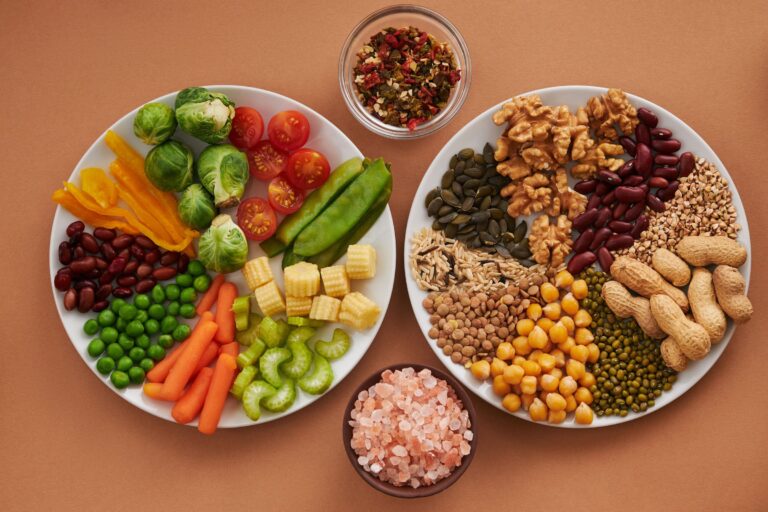
Plant proteins absolutely count — combining legumes, grains, soy, nuts, and seeds across the day covers all essential amino acids. For high-protein meal ideas, browse our recipes and meal planning library.
Signs You May Not Be Eating Enough Protein
Constant hunger and snack cravings, even after meals
Slow recovery from workouts, or gradual strength loss
Hair shedding, brittle nails, and slow wound healing
Frequent colds and infections
Swelling in the lower legs (in severe deficiency)
Can You Eat Too Much Protein?
For healthy people, intakes up to 2.2 g/kg show no evidence of harm to kidneys — the “protein damages your kidneys” claim comes from studies of people with pre-existing kidney disease, where restriction is medically indicated. The practical downsides of very high intakes are displacement (crowding out fiber-rich carbohydrates and healthy fats) and cost. We unpack claims like this in food science and myth-busting.
If you have diagnosed kidney disease, diabetes with kidney involvement, or are pregnant, talk to your doctor or a registered dietitian before pushing intake above the RDA.
Key Takeaways
The RDA (0.8 g/kg) is a minimum, not an optimum — most people do better at 1.0 g/kg or above.
Muscle gain: 1.6–2.2 g/kg. Weight loss: 1.2–1.6 g/kg. Over 60: 1.2–1.5 g/kg.
Spread protein across 3–5 meals with 20–40 g per meal for best results.
Whole foods first; protein powder is a convenient supplement, not a requirement.
Healthy kidneys handle higher protein intakes without harm.
About the author

Jamshaid Ibrahim, HNDNutritionist and food processing specialist
Nutritionist and food processing specialist. Built production for traditional health products at Glaxay Foods, with the food safety and packaging compliance behind it.
View full profile and articlesAbout the medical reviewer

RD Saeed Ahmad, MSPHCo-founder and nutritionist, Nuritron
Nutritionist and public health researcher, and co-founder of Nuritron. Works in clinical and community nutrition, type 2 diabetes and One Health policy.
View full profile and articles