
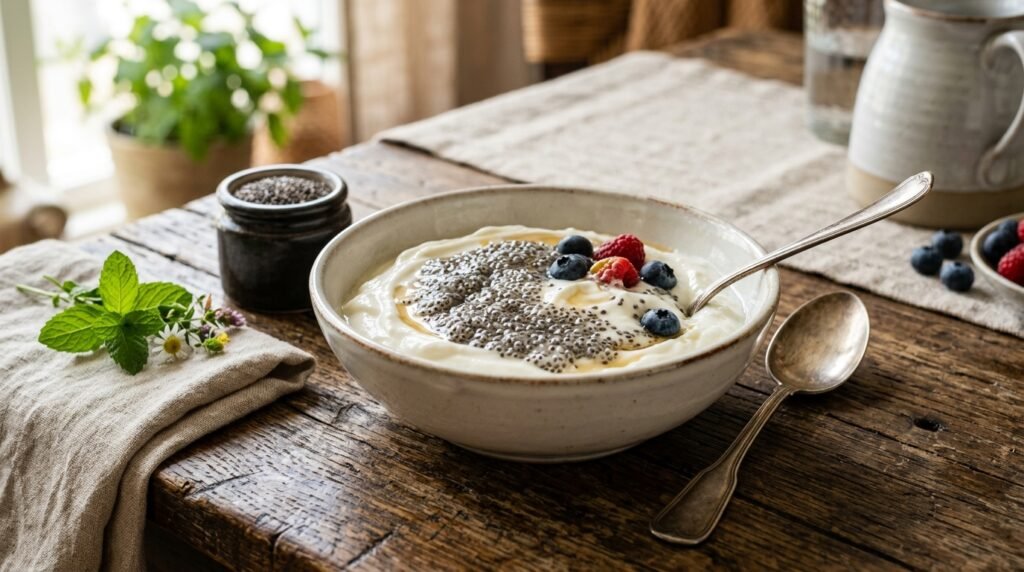


If you are wondering how to eat chia seeds safely, soak them first. Always soak them in water or milk before eating. These tiny black seeds are incredibly rich in dietary fibre and protein (learn more about chia seeds in Urdu). However, eating them dry can cause severe choking hazards and stomach pain. Mix soaked seeds into everyday Pakistani foods like fresh dahi, cold lassi, or warm milk. This helps you digest them easily without needing complex recipes.
Key takeaways
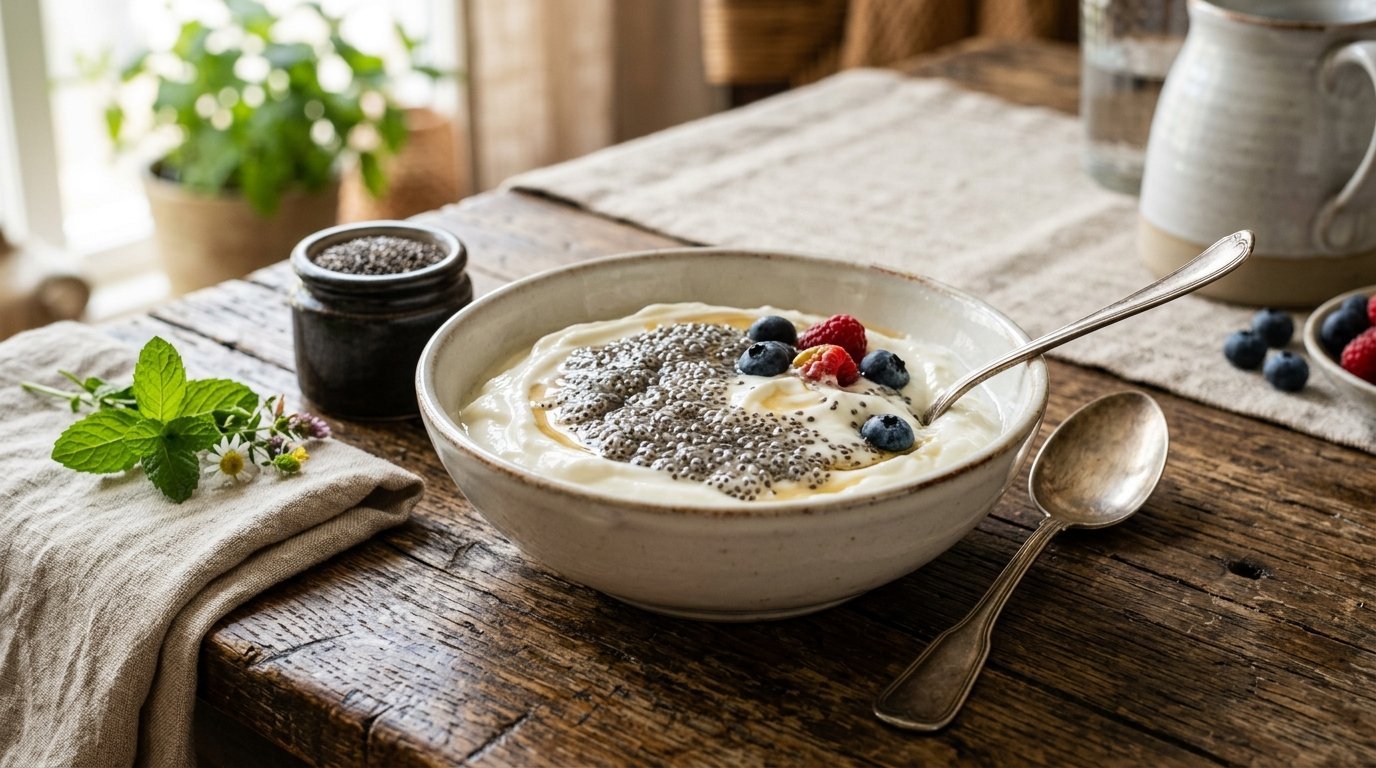
- Always soak chia seeds in a liquid before eating them to prevent dangerous choking risks.
- Limit your daily intake to one or two tablespoons to avoid uncomfortable bloating.
- You can easily mix soaked chia seeds into everyday Pakistani staples like dahi, lassi, or warm milk.
_Disclaimer: This article is for educational purposes and does not replace medical advice. If you have difficulty swallowing, consult your doctor before making dietary changes._
Why You Should Always Soak Chia Seeds
When considering how to eat chia seeds, remember that dry chia seeds absorb significant amounts of water rapidly. They create a thick mucilage that can pose a choking hazard or cause esophageal blockages if eaten dry, so soaking is recommended. You should never eat these seeds straight from a spoon. Do not sprinkle them completely dry over your food.
When you place a chia seed in any liquid, it forms a thick gel coating. This rapid expansion happens very quickly. If you swallow them dry, they pull natural moisture from your throat. They expand while on their way down to your stomach. This expanding mass of gel can easily get stuck in your food pipe. People with swallowing difficulties face an especially high risk of blockages if they eat dry seeds.
Learning how to eat chia seeds means knowing that soaking also makes the seeds much easier for your body to process. The thick gel moves very smoothly through your digestive tract. You only need to soak them for fifteen to twenty minutes in room temperature water. After soaking, they will swell up and become completely soft. This makes them perfectly safe to swallow. For breakfast, you can simply leave them in water in the fridge overnight.
Safe Daily Dosage: How Much Is Too Much?
If you are wondering how to eat chia seeds daily, there is no official daily limit for chia seeds. However, nutritionists typically recommend one to two tablespoons per day. This amount provides five to ten grams of dietary fibre. This helps you meet the daily macronutrient requirements of 25 to 30 grams without overloading your gut. (See Nutrition Reviews guidelines).
When figuring out how to eat chia seeds, starting with a small amount is the safest approach. Suddenly eating large amounts of chia seeds can cause uncomfortable gas and stomach pains. Your gut needs adequate time to adjust to the extra fibre load. Begin with just one single teaspoon mixed into a large glass of water. After a few days, you can slowly increase the amount to one full tablespoon.
Eating more than two tablespoons daily does not give you any extra health benefits. Instead, excessive fibre might bind to important minerals in your food. This stops your body from absorbing them properly. Two tablespoons will easily fit into your daily routine. They do not take the place of other important foods like fresh vegetables or whole grains. Always drink plenty of extra water throughout the day.
Can We Drink Chia Seeds in Winter?
When you know how to eat chia seeds, they can be consumed year-round in hot or cold milk. The idea of ‘cooling’ properties comes from traditional beliefs, not scientific properties. Many people in Pakistan completely stop eating certain seeds during the colder winter months. This is because of old cultural rules about heating and cooling foods. There is absolutely no medical reason to avoid them in winter.
Your body processes the vital nutrients in these seeds exactly the same way in December as in June. The seeds do not lower your core body temperature. They do not cause you to catch a cold or a sore throat. The high fibre and healthy fats remain incredibly beneficial for your heart health regardless of the weather.
If you prefer to avoid cold drinks during cold winter mornings, add soaked seeds to warm liquids instead. Mixing them into a cup of warm milk or warm water is perfectly safe. You do not have to give up your healthy daily routine just because the temperature drops.
3 Easy Ways to Eat Chia Seeds with Pakistani Foods
You do not need to make complex overnight puddings to enjoy these seeds. You can easily add them to normal local meals that you eat every day.
First, if you want to know how to eat chia seeds, adding soaked chia seeds to fresh dahi is an excellent daily habit. Evidence suggests that chia seed mucilage blends very well with yogurt. It can actually improve its texture and stability. (See Food Chemistry study). You can stir one spoonful of pre-soaked seeds into your morning yogurt. The seeds have a very mild flavour. They do not change the familiar taste of the dahi at all.
Second, you can mix them directly into your daily glass of lassi. Whether you prefer sweet meethi lassi or salty namkeen lassi, the soft gel mixes right in. Because the seeds become soft after soaking, they glide down easily as you drink. This is a very simple and refreshing way to increase your soluble fibre intake.
Third, another great way for how to eat chia seeds is to stir them into a warm cup of milk before going to bed. Evidence suggests that the linolenic acid in chia seeds is only minimally affected by mild heating up to forty degrees Celsius. You can safely stir them into warm milk without destroying their healthy omega-3 fats. Always soak the seeds in room temperature water first. Then, mix that resulting gel directly into your warm milk.
The Difference Between Chia Seeds and Tukh Malanga
Chia seeds and tukh malanga are very often confused in local markets. However, they come from completely different plants. Evidence indicates that chia seeds and basil seeds are distinct species with different functional properties and adsorption capacities.
Tukh malanga are the seeds of the sweet basil plant. They are entirely black and slightly larger. They swell up almost instantly the moment they touch water. Chia seeds come from a desert plant originally found in Mexico. They are a mix of grey, brown, black, and white colours. They take much longer to absorb water and form a gel.
While both seeds form a healthy gel, knowing how to eat chia seeds gives you different nutritional values. Chia seeds contain high amounts of healthy omega-3 fats and protein. Tukh malanga contains less fat and protein. It is traditionally valued in South Asia for making refreshing summer drinks like falooda and Rooh Afza. You can use either seed in your daily drinks. If you specifically want those healthy omega-3 fats, ask your shopkeeper clearly for chia seeds.
Can we eat chia seeds without soaking?
No, you should never eat them dry. When learning how to eat chia seeds, remember this rule. Dry chia seeds absorb significant amounts of water rapidly. They create a thick mucilage that can pose a choking hazard or cause esophageal blockages if eaten dry, so soaking is always recommended.
Can we drink chia seeds with hot milk?
Yes, you can safely drink them with warm milk, which is a common way for how to eat chia seeds. Evidence suggests that the healthy omega-3 fats in the seeds are minimally affected by mild heating up to forty degrees Celsius. Always soak them in a little water first before adding them to the warm milk.
Are chia seeds and tukh malanga the same?
No, they are different seeds entirely. Evidence indicates that chia seeds and basil seeds are distinct species with different functional properties. Tukh malanga comes from the sweet basil plant and swells instantly. Chia seeds contain more healthy fats and take much longer to soak.
How to eat chia seeds on an empty stomach in the morning?
When figuring out how to eat chia seeds, the best way is to soak one tablespoon of seeds in a glass of water for twenty minutes. You can also leave them in the fridge overnight. You can drink this gel-like water first thing in the morning to support your digestion.